


By The Tahona Editorial Team
Celebrate Cinco de Mayo with Tequila and Chili-Based Cocktails
Written by
The Tahona Editorial Team
Published on
Apr 23, 2026
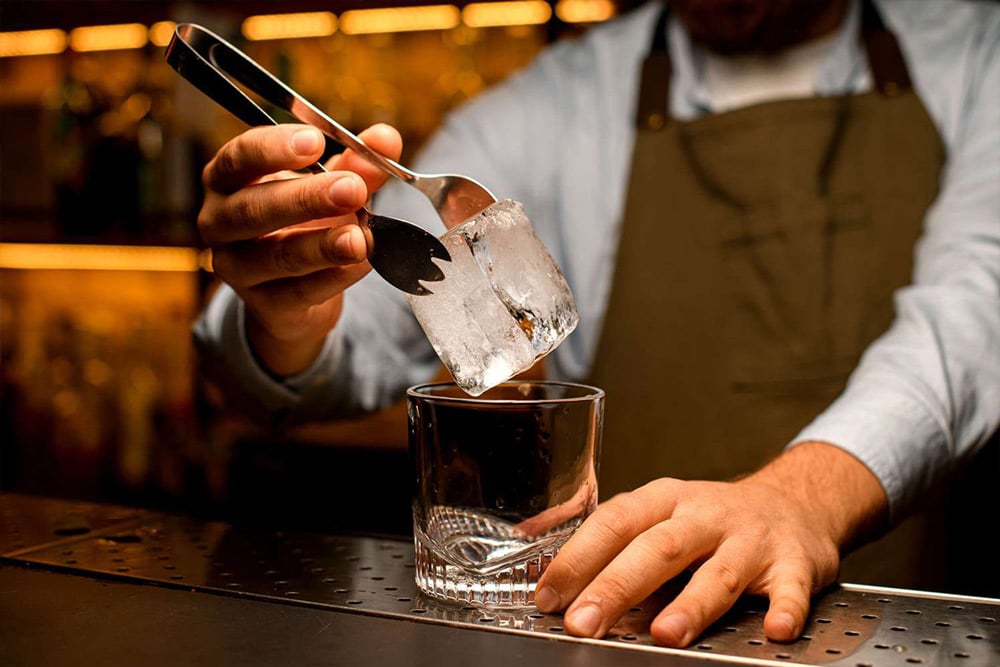
Is your ice worthy of your cocktails? If your cubes are small, cloudy, and crack on contact, you are already at a disadvantage. But if your ice is clear and carved with surgical precision, it signals something else entirely: a professional who understands not only flavor, but the physics of pleasure.
In the world of high-end cocktails and modern mixology, ice is not an accessory. It is a liquid diamond, an active ingredient that defines the structure of a perfect drink.
For bartenders, understanding the physics behind cold is what separates an average cocktail from a precise, well-executed masterpiece. Ready to step into this frozen universe?
In his book Liquid Intelligence, widely considered a cornerstone of modern mixology, Dave Arnold explains that shaking a cocktail can bring its temperature down to around -8°C, while stirring with fine ice can bring it down to about -7°C. With standard bar ice and regular shaking, most cocktails land between -5°C and -6°C.
One of his most important lessons is that the cooling power of ice does not come primarily from its initial temperature (for example, if it’s at 10ºC), but from the energy required to melt it, also known as the latent heat of fusion.
Ice is not just a cold block. It is a reservoir of thermal energy. We do not chill a cocktail because ice is cold, but because it melts and absorbs heat from the liquid. That is why dilution is not a mistake. It is the engine of cooling.
There is also a golden rule. There is no cooling without dilution, unless you use external techniques like liquid nitrogen. For Arnold, ice that has been sitting out and has water on its surface is the enemy of consistency, because it adds uncontrolled dilution. Ice should be used dry and at stable temperatures to ensure predictable thermal exchange.
Texture also plays a role. Inside a shaker, ice acts like a hammer, aerating the mixture. The size and hardness of the cube determine foam density in drinks like sours made with egg white or citrus.
Water quality is the canvas of flavor. While some bartenders suggest using distilled water, most experts prefer water filtered through reverse osmosis.
Distilled water produces “flat” ice that lacks the mineral structure needed for a clean, expressive taste. Filtered water removes chlorine and unwanted odors from the local supply while preserving a mineral profile that enhances the botanicals in spirits.
Reverse osmosis takes this a step further. It acts as a microscopic filter that allows only water molecules to pass through, blocking chlorine, metals, lime, and sediment. The result is pure, dense ice that prevents unwanted flavors from interfering with the final drink.
Thinking about installing a reverse osmosis system in your bar? It is about the size of a small suitcase and connects directly to your ice machine’s water supply. The result is crystal-clear water that ensures your Oaxaca Old Fashioned tastes exactly the same every time, regardless of local water variations.
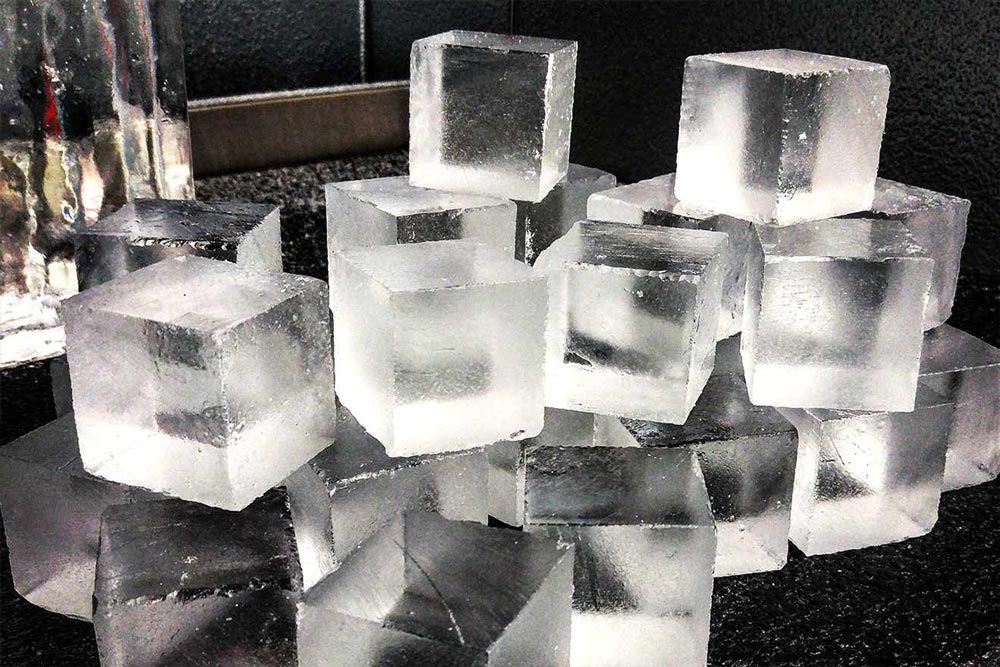
Cloudy ice is a sign of trapped air and impurities. It fractures easily and leads to uneven dilution.
To solve this, Camper English, often considered the father of modern ice, developed a standard technique known as directional freezing. It produces crystal-clear ice without the need for expensive equipment like a Clinebell machine.
The concept is simple. Control how the ice freezes.
Camper’s method mimics how a lake freezes, from the top down. As the water solidifies, it pushes air and impurities downward, leaving a top layer of dense, transparent ice.
Time to put this into practice.
You will need a polystyrene cooler. Its insulated walls prevent cold from entering through the sides or bottom.
Fill it with reverse-osmosis-filtered water and place it in the freezer without a lid, so the cold air contacts only the surface. Let it freeze for 24 to 30 hours. The key is not letting it freeze completely.
Remove the cooler and flip it over. You will see two layers. A clear, solid ice block on top, about 5 to 10 centimeters thick, and below it, cloudy ice or liquid water that still contains impurities.
Break away the cloudy portion with an ice pick. Let the clear block rest at room temperature for 10 to 15 minutes before cutting it with a bread knife to avoid cracking from thermal shock.
The result is luxury-grade ice. Dense, slow-melting, free of air bubbles, and pure enough to preserve the organoleptic profile of premium spirits. You can even carve it into diamond shapes that make guests feel as if they are holding something precious.
Camper English is also the author of The Ice Book: Cool Cubes, Clear Spheres, and Other Chill Cocktail Crafts, a practical guide every bartender should have on their shelf.
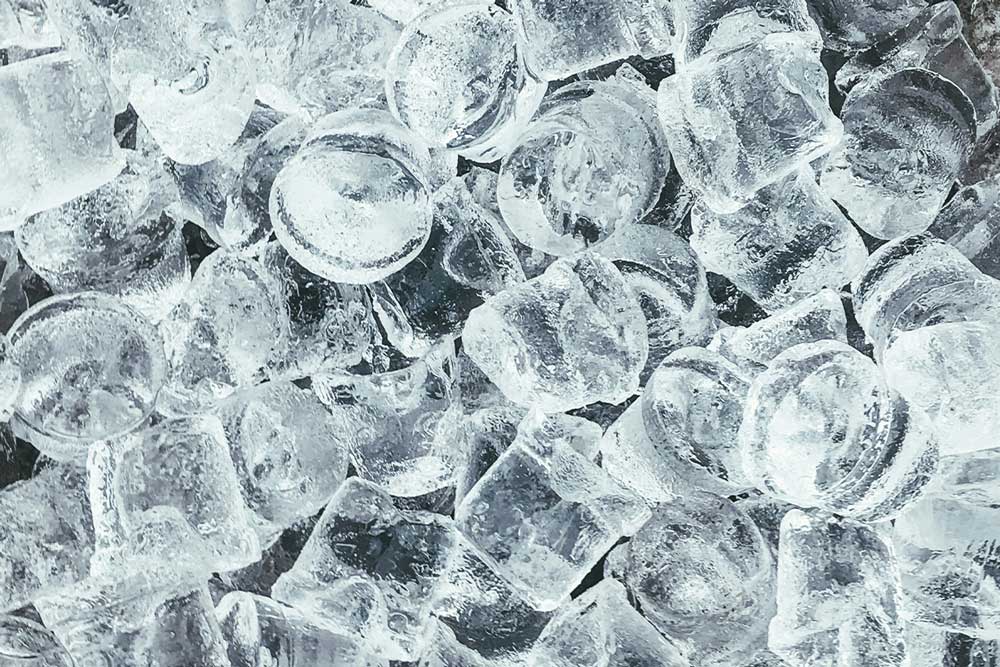
| Type | Use | Benefit |
| Large Cube (2″) | Oaxaca Old Fashioned, Tequila Negroni | Minimal surface area, slower dilution |
| Ice Sphere | Neat spirits, ideal for aged tequilas | Premium presentation, ultra-slow dilution |
| Pellet / Crushed | Juleps, Tiki drinks | Instant chilling, controlled dilution for balance |
| Collins Spear | Highballs like Altos Crafted Paloma or Tequila Soda | Preserves carbonation by filling the length of the glass |
Ice is more than temperature control. It is a channel for flavor that transforms the guest experience. By using ice infused with citrus oils, salts such as Maldon, or spiced syrups, you can create drinks that evolve over time. As the ice melts, the aromatic profile intensifies instead of fading.
When freezing botanicals like flowers or fruit peels, make sure they are completely free of juice. Acidity is one of the main causes of cloudy ice. For syrup-based ice, use a ratio of one part syrup to ten parts water to maintain proper structure.
Ice is the only ingredient that does not appear on the menu, yet it defines the first impression.
If you are not treating your ice with the same respect as your most expensive spirit, it is time to start. Because your level of mastery will always be judged by the quality of the ice you serve.