By The Tahona Editorial Team
Celebrate Cinco de Mayo with Tequila and Chili-Based Cocktails



Written by
The Tahona Editorial Team
Published on
Apr 23, 2026
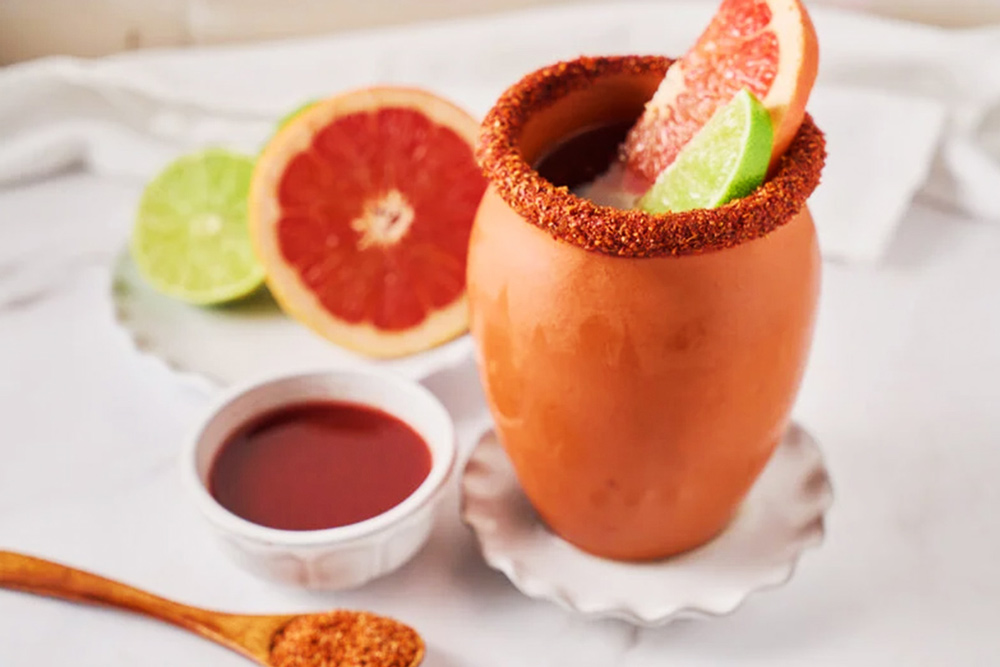
Forget Nude glassware or hand-blown, lead-free crystal for a moment. Let’s talk about the Cantarito. It is not just a clay cup. It is one of the oldest forms of thermal engineering in human history. And a cocktail, too!
Long before becoming an icon of Amatitán, Jalisco, narrow-necked, round-bodied clay vessels were already considered advanced technology.
Their history goes back to China 20,000 years ago, where early potters used them to transport water. In ancient Egypt, they were used to keep liquids cool, while in pre-Hispanic Mexico, they became sacred vessels for fermenting pulque. This is a container with far more history than you might expect.
And that is not all. During the 17th and 18th centuries, clay vessels from Tonalá, known in Europe as Búcaros de Indias, were considered luxury objects.
Their refinement was so remarkable that Spanish painter Diego Velázquez immortalized them in his masterpiece Las Meninas (1656), where the young Infanta Margarita is seen receiving one of these pieces.
Unlike the Paloma or the Margarita, the Cantarito cokctail is a citrus explosion in its purest form.
It does not rely on a single citrus note. It combines orange juice, grapefruit juice, lime juice, and even grapefruit soda. Add 100% agave blanco tequila, plenty of ice, and salt, a key chemical and sensory modifier worth pausing on.
In his book On Food and Cooking: The Science and Lore of the Kitchen, Harold McGee, explains that salt does more than suppress bitterness. It helps release aromatic molecules, allowing citrus flavors to shine. It enhances the perceived sweetness of orange and the natural character of agave, without the need for additional sweeteners.
Just like in the kitchen, salt acts as a flavor enhancer. It also triggers salivation, which, combined with the effervescence of grapefruit soda, elevates the entire drinking experience.
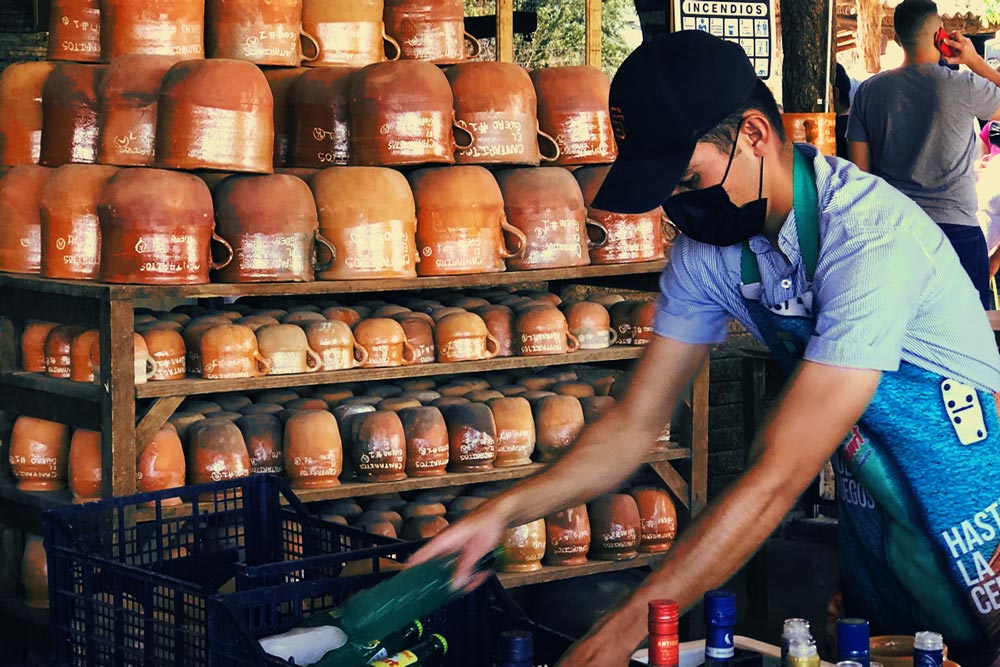
The Cantarito is one of the strongest examples of a Mexican-crafted cocktail. Not only because of its ancestral roots, but also because its rustic presentation breaks away from what we are used to seeing in top cocktail bars in New York, London, or Mexico City.
According to the Australian outlet The Shout (National Liquor News), “the drink emerged in the early 20th century, perhaps around the Mexican Revolution […] to beat the heat.”
Its modern, globally recognized version, however, dates back to 1997 in Amatitán, Jalisco. Sources such as Tequila México and Imbibe Magazine point to Cantaritos El Güero, located along the Guadalajara–Tepic highway, as the originators of this more complex cousin of the Paloma.
Something special happens when you serve a Cantarito in its traditional clay vessel.
Thanks to the clay’s porosity, which allows direct contact with the liquid, mineral and earthy aromas are released. This is known as petrichor, the same scent produced when rain falls on dry soil or stone. You know that smell. Now imagine it as part of your cocktail experience.
Clay also acts as a natural, zero-electricity refrigerator. Its porous structure allows water to migrate to the outer surface and evaporate, helping keep the drink cold for longer. This makes it ideal for warm, dry climates like Amatitán, where temperatures range between 21.9 and 34 degrees Celsius.
At the heart of the Cantarito is blanco tequila, made from agave grown in volcanic and clay-rich soils. The petrichor notes from the clay vessel naturally enhance the spirit’s earthy and vegetal profile, elevating the cocktail to feel both rustic and refined.

More than just a drink, Cantaritos from Amatitán are an expression of identity. They represent the authenticity of Mexico.
From the small 500 ml clay cup to the impressive 21-liter vessel, each serve is a tribute to shared history and to petrichor, that invisible ingredient that transforms this cocktail into an organic jewel of Jalisco. A drink deeply tied to its people, present in local fairs, town squares, and street markets.
Cantaritos are the ultimate expression of a folk cocktail, or folktail. They do not chase perfection. They preserve something else entirely. A refreshing, vibrant liquid served in beautiful, handmade clay vessels.
And that is exactly where their charm lies.